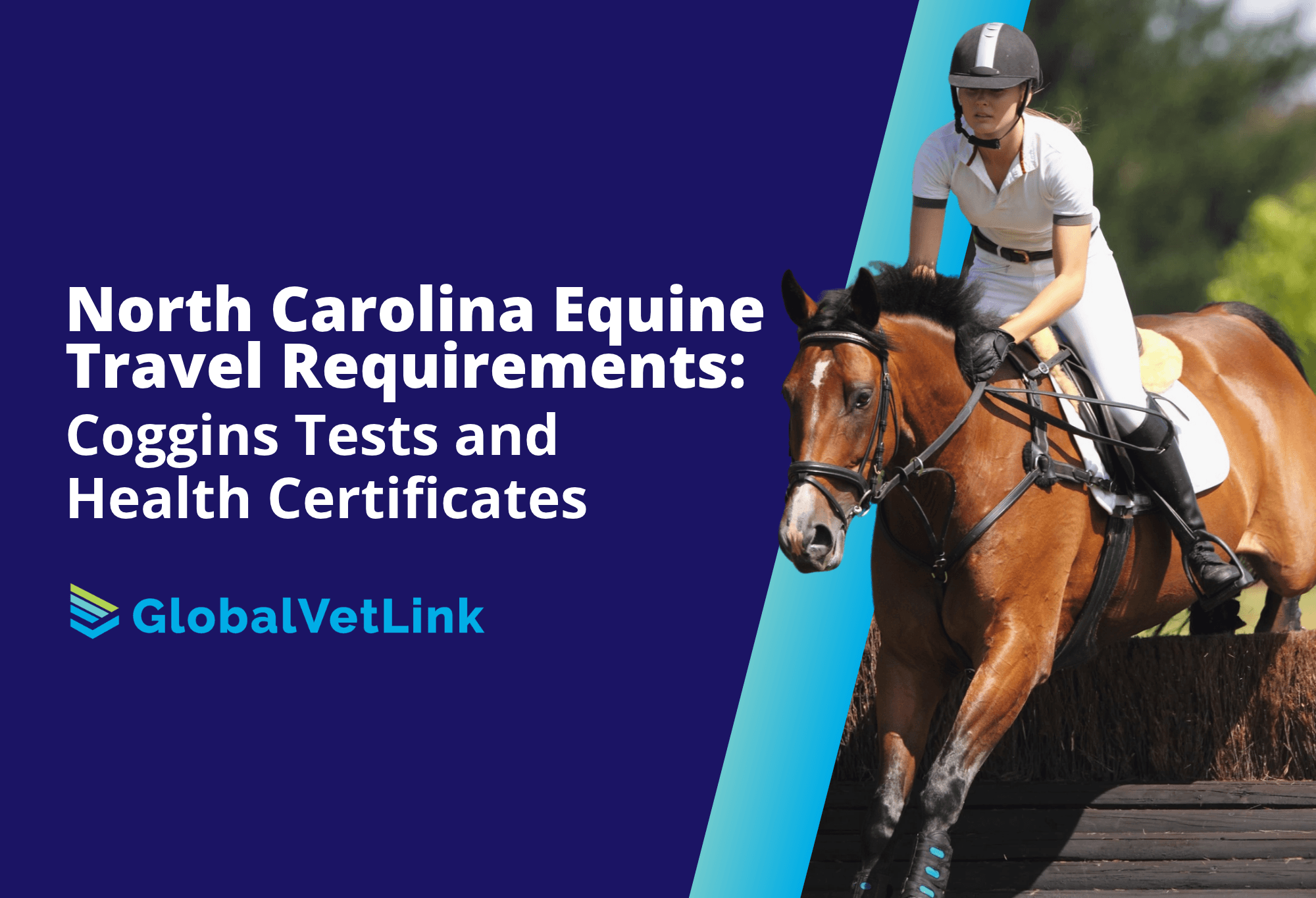
Traveling with horses across state lines requires a little preparation, whether the destination is a horse show, sale, breeding facility, trail ride, or new home. For horses entering North Carolina, owners and veterinarians should make sure required health documentation is current and ready before travel.
This guide covers North Carolina's Coggins test and Certificate of Veterinary Inspection (CVI) requirements, along with additional considerations that may affect equine movement into the state.
North Carolina Coggins Test Requirements
Horses and other equines entering North Carolina generally need proof of a current negative Equine Infectious Anemia (EIA) test, commonly known as a Coggins test.
North Carolina requires:
Equines over six months of age to have a negative official EIA test.
The EIA test to have been completed within the 12 months prior to entry.
Each EIA test form covers a single horse.
A current Coggins test helps demonstrate compliance with North Carolina's entry requirements while supporting efforts to prevent the spread of Equine Infectious Anemia.
North Carolina Health Certificate Requirements
In addition to a current negative Coggins test, horses entering North Carolina generally need an official Certificate of Veterinary Inspection (CVI) issued by a licensed, accredited veterinarian.
For standard interstate movement into North Carolina, the CVI should be issued within 30 days of entry.
Before issuing the certificate, veterinarians should confirm that the horse's identification and health information are complete and accurate. Horse owners should keep the required documentation available throughout transport.
Individual events, facilities, or venues may have additional or more restrictive health requirements, so travelers should confirm requirements with their destination before departure.
Special Disease and Movement Restrictions
Disease outbreaks or animal health quarantines can temporarily change the requirements for horses entering North Carolina.
Equines originating from an area affected by a quarantine or specific disease concern may be subject to additional entry requirements. Depending on the situation, these could include additional statements on the CVI, testing requirements, permits, or a shorter timeframe for the health certificate.
For example, restrictions related to diseases such as Vesicular Stomatitis or regional animal health concerns such as New World Screwworm may affect interstate movement requirements.
North Carolina and the Extended Equine CVI (EECVI)
North Carolina participates in the Extended Equine Certificate of Veterinary Inspection (EECVI) program, giving eligible horse owners another option for frequent interstate travel.
An EECVI can be valid for up to six months and is especially useful for horses traveling regularly between participating states for shows, competitions, trail rides, and other events. Rather than obtaining a new traditional CVI for each trip, owners can use their active EECVI and create an official movement permit for each trip.
Horse owners interested in an EECVI should work with an accredited veterinarian who offers the program through GlobalVetLink and confirm that both the origin and destination states participate in the program.
Helping Clients Stay Compliant
Veterinarians play an important role in helping horse owners prepare for interstate travel. Taking time to review documentation before departure can help prevent last-minute issues and ensure horses meet North Carolina's entry requirements.
Helpful reminders include:
Confirm the horse has a current negative Coggins test.
Ensure the CVI is issued within 30 days of travel, or verify the horse has a valid EECVI.
Double-check that identification matches across all paperwork.
Make sure copies of required documents accompany the horse throughout transport.
Planning ahead helps create a smoother travel experience while maintaining compliance with state animal health regulations.
Simplifying Compliance with Digital Solutions
Managing Coggins tests and health certificates doesn't have to involve stacks of paperwork. GlobalVetLink helps veterinarians create digital Coggins certificates, CVIs, and EECVIs while securely storing records and making them easy to share with clients.
By digitizing equine health documentation, veterinary practices can reduce administrative work, minimize errors, and help horse owners stay prepared for travel into North Carolina and beyond.
Traveling with horses across state lines requires a little preparation, whether the destination is a horse show, sale, breeding facility, trail ride, or new home. For horses entering North Carolina, owners and veterinarians should make sure required health documentation is current and ready before travel.
This guide covers North Carolina's Coggins test and Certificate of Veterinary Inspection (CVI) requirements, along with additional considerations that may affect equine movement into the state.
North Carolina Coggins Test Requirements
Horses and other equines entering North Carolina generally need proof of a current negative Equine Infectious Anemia (EIA) test, commonly known as a Coggins test.
North Carolina requires:
Equines over six months of age to have a negative official EIA test.
The EIA test to have been completed within the 12 months prior to entry.
Each EIA test form covers a single horse.
A current Coggins test helps demonstrate compliance with North Carolina's entry requirements while supporting efforts to prevent the spread of Equine Infectious Anemia.
North Carolina Health Certificate Requirements
In addition to a current negative Coggins test, horses entering North Carolina generally need an official Certificate of Veterinary Inspection (CVI) issued by a licensed, accredited veterinarian.
For standard interstate movement into North Carolina, the CVI should be issued within 30 days of entry.
Before issuing the certificate, veterinarians should confirm that the horse's identification and health information are complete and accurate. Horse owners should keep the required documentation available throughout transport.
Individual events, facilities, or venues may have additional or more restrictive health requirements, so travelers should confirm requirements with their destination before departure.
Special Disease and Movement Restrictions
Disease outbreaks or animal health quarantines can temporarily change the requirements for horses entering North Carolina.
Equines originating from an area affected by a quarantine or specific disease concern may be subject to additional entry requirements. Depending on the situation, these could include additional statements on the CVI, testing requirements, permits, or a shorter timeframe for the health certificate.
For example, restrictions related to diseases such as Vesicular Stomatitis or regional animal health concerns such as New World Screwworm may affect interstate movement requirements.
North Carolina and the Extended Equine CVI (EECVI)
North Carolina participates in the Extended Equine Certificate of Veterinary Inspection (EECVI) program, giving eligible horse owners another option for frequent interstate travel.
An EECVI can be valid for up to six months and is especially useful for horses traveling regularly between participating states for shows, competitions, trail rides, and other events. Rather than obtaining a new traditional CVI for each trip, owners can use their active EECVI and create an official movement permit for each trip.
Horse owners interested in an EECVI should work with an accredited veterinarian who offers the program through GlobalVetLink and confirm that both the origin and destination states participate in the program.
Helping Clients Stay Compliant
Veterinarians play an important role in helping horse owners prepare for interstate travel. Taking time to review documentation before departure can help prevent last-minute issues and ensure horses meet North Carolina's entry requirements.
Helpful reminders include:
Confirm the horse has a current negative Coggins test.
Ensure the CVI is issued within 30 days of travel, or verify the horse has a valid EECVI.
Double-check that identification matches across all paperwork.
Make sure copies of required documents accompany the horse throughout transport.
Planning ahead helps create a smoother travel experience while maintaining compliance with state animal health regulations.
Simplifying Compliance with Digital Solutions
Managing Coggins tests and health certificates doesn't have to involve stacks of paperwork. GlobalVetLink helps veterinarians create digital Coggins certificates, CVIs, and EECVIs while securely storing records and making them easy to share with clients.
By digitizing equine health documentation, veterinary practices can reduce administrative work, minimize errors, and help horse owners stay prepared for travel into North Carolina and beyond.
Getting Started
Explore more blogs
Explore more blogs