Digital EECVIs

Extended Equine Certificate of Veterinary Inspection

Compliant travel for six months with GlobalVetLink Extended Equine Health Certificates

While rules vary by state, traveling with horses often requires up-to-date Certificates of Veterinary Inspection (CVI / health certificates), sometimes current within the last month.

Several state animal health departments allow veterinarians and horse owners the option of a six-month health certificate, as long as a current Equine Infectious Anemia (EIA) / Coggins test has been provided.

Digital EECVIs: Easy, Compliant and Accurate

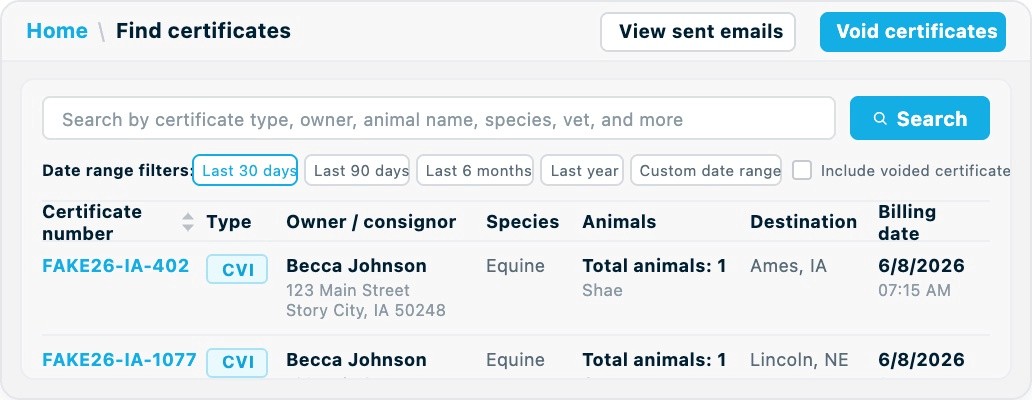
Through the GlobalVetLink platform, veterinarians can create an EECVI online, submit it to their state animal health official electronically and provide owners with online access to create their travel permits 24/7.

  • Equine health certificate that lasts up to six months
  • Owners have 24/7 access in online account
  • Travel permits automatically submitted to states
  • Greater participation nationally and growing
Horse Tied to Trailer

See How GlobalVetLink EECVIs Work

Imagine having to pay for separate health papers every time you travel. With EECVIs, you get a six month health certificate for just a few dollars more.

Gayle Spelman, Registered Veterinary Technician, Thomasville Animal Hospital
Thomasville, Georgia

EECVI Participating States

Acceptance of these six month equine health certificates continues to grow among states. Find out why.

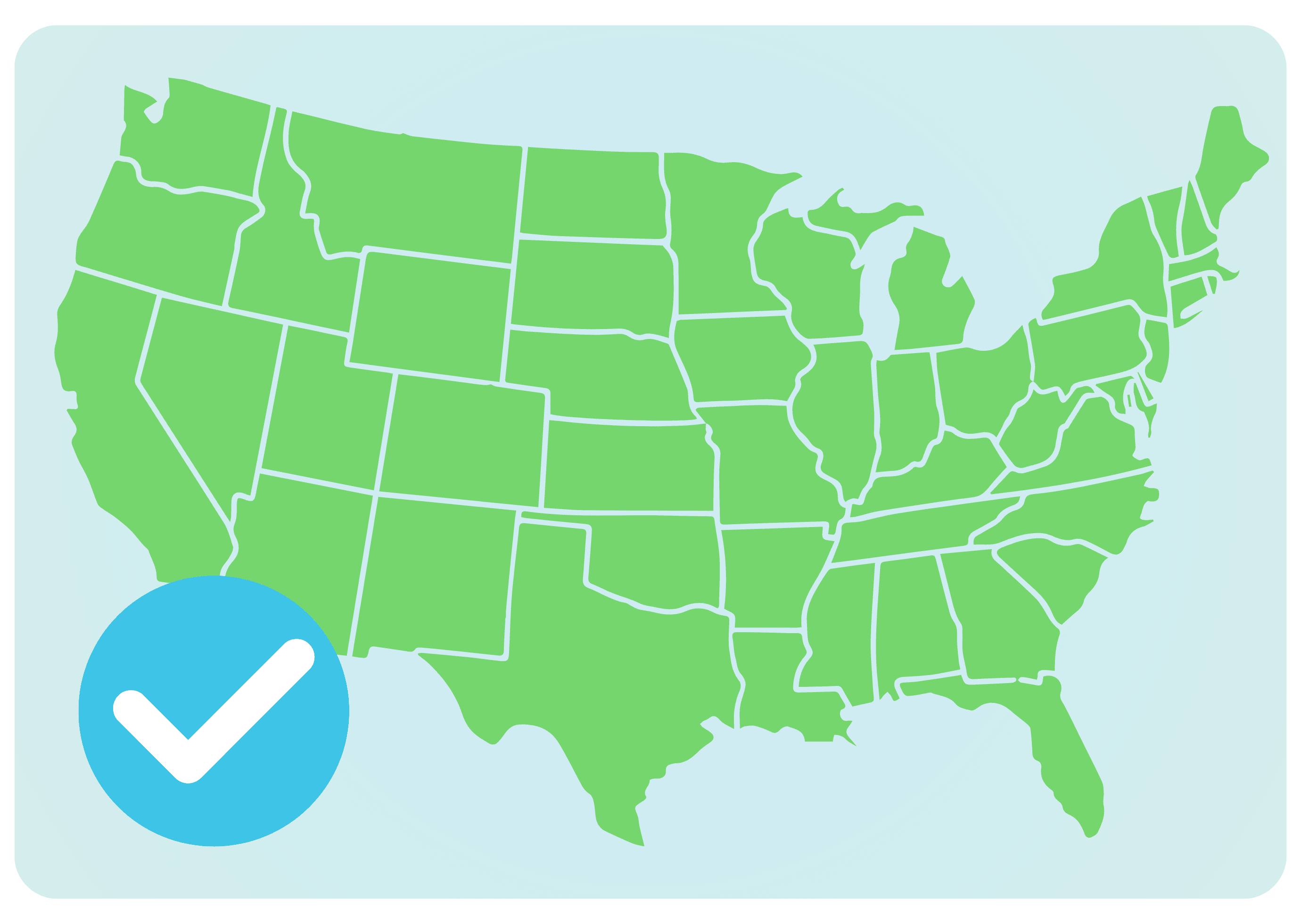
The states that are currently participating in the EECVI program include: Alabama, Arizona, Arkansas, California, Colorado, Florida, Georgia, Idaho, Indiana, Kansas, Kentucky, Louisiana, Maryland, Minnesota, Missouri, Mississippi, Montana, Nebraska, Nevada, New Mexico, New York, North Carolina, North Dakota, Oklahoma, Oregon, Rhode Island, South Carolina, South Dakota, Tennessee, Texas, Utah, Vermont, Virginia, Washington, West Virginia, Wyoming, and District of Columbia.

Many additional states plan on participating but are not able to at this time due to the requirement of a legislative rule change period. We will share information as additional states join the program in the future.

If you have questions about your state participating, please contact your state animal health official. Contact information for each state may be found by searching here.

Hover over a state in the interactive map to learn more about state ID requirements.

How long is an EECVI health certificate valid?

GlobalVetLink's easy-to-use software provides Extended Equine CVIs that last for six months.

GlobalVetLink developed EECVIs to support the states that offer six-month health certificates with a digital solution. Through the GVL software system, veterinarians can create an EECVI online, submit it to their state animal health official electronically and provide owners with online access to create their travel permits 24/7.

Frequently Asked Questions About GlobalVetLink’s EECVIs

An Extended Equine Certificate of Veterinary Inspection (EECVI) is a six-month equine health certificate that allows horses to travel across state lines for up to six months without requiring a new certificate for each trip. Unlike traditional CVIs, which are valid for 30 days, EECVIs offer a cost-effective solution for horse owners who frequently travel to shows, trail rides, festivals, and other events. The EECVI was developed by GlobalVetLink in partnership with state veterinarians and launched on January 1, 2019.

An EECVI is valid for six months from the CVI inspection date OR until the horse’s current Equine Infectious Anemia (EIA/Coggins) test expires, whichever comes first. Since EIA tests are typically valid for 12 months from the blood draw date, the EECVI expiration is determined by whichever date occurs sooner. This ensures horses maintain current disease testing throughout the certificate’s validity period.

Over 37 states currently participate in the EECVI program, including Alabama, Arizona, Arkansas, California, Colorado, Florida, Georgia, Idaho, Indiana, Kansas, Kentucky, Louisiana, Maryland, Minnesota, Missouri, Mississippi, Montana, Nebraska, Nevada, New Mexico, New York, North Carolina, North Dakota, Oklahoma, Oregon, Rhode Island, South Carolina, South Dakota, Tennessee, Texas, Utah, Vermont, Virginia, Washington, West Virginia, Wyoming, and the District of Columbia. Many additional states plan to participate, but require legislative rule changes. For the most current list, visit GlobalVetLink’s EECVI page.

A Health Declaration and Movement Permit (HDMP) is the travel document that horse owners create for each individual trip when using an EECVI. Prior to each movement, owners log in to their MyVetLink account, enter their travel dates, origin, destination, and confirm that their horse is healthy. The system generates an HDMP that serves as the documentation displayed when crossing state borders. The HDMP must be kept together with the EIA/Coggins test (digital or paper copies are acceptable) for the EECVI to remain valid.

Four forms of official ID are accepted for EECVIs: lifetime brand inspection, microchip, photo EIA/Coggins test, or EIA/Coggins accession number from a complete and legible test, including drawings and written description. However, each state has specific requirements—some states only accept microchips, while southern states typically accept either a microchip OR a photo Coggins. GlobalVetLink’s platform features an interactive map that displays which forms of identification each state accepts.

Yes, both the state of origin and the state of destination must participate in the EECVI program for a horse to be issued an EECVI. If either state does not accept EECVIs, you will need to use a traditional 30-day CVI instead. Additionally, if a horse travels through a non-participating state during transit, check with that state’s animal health official about whether the EECVI will be accepted or if a standard CVI is required for passage through their state.

After the veterinarian commits the EECVI, the horse owner receives an email notification and can log into their MyVetLink account 24/7 to create movement permits. Owners click on Certificates, select their EECVI certificate number, choose “Create a permit,” enter movement information (travel dates, origin, destination), affirm the horse is healthy, commit the permit, and then download or print it for travel. A new HDMP must be created for each trip and each horse traveling.

Each horse must have its own individual EECVI. This requirement ensures accurate traceability in the event of a disease outbreak, allowing for the proper tracking of each animal’s health status and movements. While this means creating separate certificates for each horse, it provides better disease control and compliance with state animal health regulations.

Acceptance varies by facility. While EECVIs are designed for horses traveling to competitive events, shows, and exhibitions, some racetracks may not accept them (for example, Indiana specifically notes EECVIs are not approved for racetrack movements). Individual show venues and event organizers may have their own requirements. Always check with the specific facility or event organizer in advance to confirm they accept EECVIs, as some may require traditional 30-day CVIs instead.

No, the Coggins/EIA test does not need to be a GlobalVetLink Coggins to be used for an EECVI. However, if you have a qualifying GVL EIA for the horse, that information will automatically populate under the Official ID section when creating the EECVI, saving time. If the horse doesn’t have a GVL EIA, you can manually enter the EIA information in the Qualifying EIA section, including the test date, laboratory, and accession number from any USDA-approved laboratory.